Saturday, 20 July 2013

Butterfly count!

Well over the past couple of days it has been perfect for the big butterfly count that is being promoted by the Butterfly Conservation charity. This is a brilliant way to fill up a spare 15 minutes. Me and my mum are going around the parks in Preston and finding a nice spot in the sun to sit and count the butterflies. This is a good way to make a difference, the past 2 springs have been detrimental to insects but this warm summer may give them a boost they need.

Hope you get out and enjoy, for more information look at the Butterfly Conservation site. Have fun getting out in the sun!

Thursday, 18 July 2013

Mud Pack - Wildlife Trust

Well I decided that I needed to do something with my summer, so what better to do than volunteering for trusts. I was told about a group which goes out once a week to a reserve and gets involved with some practical conservation. I thought this would gain me new skills and also allow me to meet new people.

So off I went to the meet up point at 9.30am, we left about 10 and head to Belmont which is towards Burnley. We spent the whole day fixing dry stone walls and digging up more stones. It was hard work, especially in the heat but well worth it!
Before


After


If you want to volunteer in your area then try looking at large trusts, like the Wildlife Trust or the BTO, you could also see if your council runs a volunteering site for you to apply to. Hope you get out and enjoy the summer!
Cows..cause why not!

Monday, 15 July 2013

Bardsey Island

I am sorry for lack of blogs lately I have been busy and not got round to writing any but there should be a few more within the next couple of weeks. This one is about my week on Bardsey Island!

23 students and 3 staff left Bangor University in the early hours on the 16th June.  It took 3 boat trips for us all to arrive, the boat trip allowed us to have our first look at some of the birds that lived and visited the island one boat was lucky enough to have a Gannet flying over. We were keen to start making up for lost time, as we were delayed a day because of strong winds, so we did a bit of exploring around the observatory. After we had a brief introduction to the island, the observatory and the people who worked there; we continued exploring the island and went to the north coast and up the mountain and back down to the observatory in the evening.
Observatory

South side of island


Even after an early start the day before, some of the students managed to get up at 5.30am to join one of the wardens on a bird survey around the island, which they do every morning. The group split into two, one of which went with the warden whilst the other group, me included, went with our lecturer to the south side of the island. We saw a variety of shore birds including; Shelducks, Rock Pipits and Oystercatchers.  We got back to the observatory in time for breakfast and then had a look at the results from the moth trap set the night before. The findings included Brown Rustic moths, Bright Line Brown Eye and a White Ermine moth. The moth trap was looked at every morning and even though there wasn’t a huge diversity, the moths amazed me with anatomy and physiology. Later in the day we went on a boat trip around the island to look at the shore birds, many of which were rearing young, these included Puffins, Razorbills, Shags and Cormorants. It was a unique chance to see the east side of the island, despite sea sickness there were some amazing sights and I would defiantly do it again.

White Ermine Moth

Brown Rustic


On the third day we went out with our lecturer, Charles Bishop to watch him while he was carrying out his pilot study on finding out where Manx Shearwaters travel when they forage during the day by using GPS and tags which measure acceleration and heart rate of the bird.  During which several birds were found these were ringed, had their wing length measured and then weighed before tags were added. The third boat trip went out to go around the island were lucky enough to see Risso Dolphins swimming around the boat. Throughout the week we had to carry out a project on the island, a wide range of topics where chosen, these included; pit fall trapping of insects, bat surveys, adder tongue fern survey, sharp rush survey and a seal survey. In the evening we went up the hill side and waited for the Manx Shearwaters to return to their nests, it was amazing hearing them flying over and calling to their mates in the burrows. Some people were lucky enough to have some land near their feet; it was a surreal experience to be so close to animal that migrated from South America to breed on this island.

Manx Shearwater
In the morning of the fourth day all of us went to the south side of the island to perform a survey on the Manx Shearwaters by looking at the burrows. We were all given an area to survey in which we had to count the number burrows, how many looked occupied and how many of those responded to a recording of a Manx call. This took a while but was good fun. Along the way Steve the warden found a Thrift Clearwing which is a rare but beautiful species of moth. Later that day it was decided that it would be good idea to do a butterfly count along the island, however, once we started the temperature had dropped which meant it wasn’t ideal for butterflies. But we continued through the fields along the west coast and down to the shore. We saw many insects throughout the walk; Pill Millipedes, Common Blue Dragonflies and Green Tiger Beetles were among our finds.  Afterwards a small group went off to go and tag some more Manx Shearwaters, they found a week old chick in one of the burrows and it was thought to be the earliest in the year that a chick had been found on the island.

Common Blue Dragonfly

Thrift Clearwing Moth
Another moth trap started the fifth day off. The group of students who were studying the seals went for a walk around the island to do a total count, which came to be around 100 seals. In the afternoon we all went down to look at seashore ecology, in which we did transect’s of the different intertidal zones. There were many species of seaweed, lichens and a few species of crab. We were all happy to find 4 common eels in a small rock pool. How many zoologists does it take to catch an eel you may wonder? It turns out about 10. After this small groups went to go and see the Golden Hair lichen which is rare in the UK. Whilst the second group went to go and see the lichen they spotted one of the little owls which breed on the island. The results from the all projects had come in and there were many very interesting findings, for example a group working on surveying the population of Palmate newts on island found 22 adults, 15 of which were in the pond by the observatory, and 18 effs (young newts) and a Horse leech was found with the use of the pit fall traps.

Sadly on the fifth day we found out that the weather forecast for the weekend wasn’t looking good so the decision had been made to go back a day early. It was sad to leave the island and even though we had lost 2 days I think we certainly managed fit a week’s worth of activities into the 5 days we had there. All the students and staff would like to say a huge thank you to the staff on the island for being very welcoming and helpful to us all and allowing us get involved with their day to day activities.  
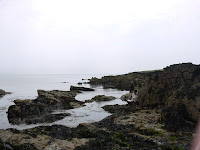
Bardsey Coast

Common Eel


Even though there is no sewage system on the island and it is likely you will be unable to take a shower due to limited water supply, I would recommend a visit to the island, even if it is just for a day, for anyone who is looking for a retreat for religious reasons or for natural interests. If you are there, a nice gift shop is on the island. As well as Bardsey fudge, which is made by the Wardens son, it is very nice and well worth the £2.50. 

Please visit the website or blog if you are interested:

Wednesday, 12 June 2013

Conwy

With my time off I have done a little bit of exploring around Bangor and North Wales. One of my first adventures was off to a little town on the North Welsh coast, called Conwy. The town is built within the castle walls.The castle was built by the English monarch Edward I in the years 1283 and 1289. 

Conwy Castle and Town Walls
Conwy Castle and Town Walls © Crown copyright (2013) Visit Wales
As you can see by the above picture the town is a lovely little place, it doesn't take long to walk around the small town. There are some lovely little shops, and when I say little I mean it. The oldest building in Conwy is the Aberconwy house, which is now a National Trust shop, it was built in the 14th Century. A warning to tall people when visiting this shop, mind the wooden beams! Along the Conwy beach is the smallest house in Great Britain, the building is 1.8m wide and the last person who inhabited the house was 6' and 3" tall! However, in the 19th century it was deemed too small to live in, so the owner went around the country measuring all the small houses and found that he had lived in the smallest. You can have a look inside the house (Adult: £1, Child: 50p). 

Smallest house in Great Britain
 As you walk along the beach to the house you can see across the water to Llandudno Junction, which you can easily walk to over the bridge (10min walk max.). In Llandudno Junction there is a Cineworld, Pizza Hut, KFC and Mcdonalds. However, if you want to go on exploring a little more, once you walk off the bridge you can follow the coast a bit further, this is a perfect walk when the sun is setting. It also gives you a good chance to see some coastal birds. 


Now back to the Castle, it is owned by the National Trust. You can walk along the walls of castle, for most the way round the town (for free, I think).  Once you enter the main castle you can learn a bit more about its history and truly appreciate how the King lived there and how the castle defended itself.


Even though this may not be a very large castle, I still think this is awe inspiring just to look at the towers and some of the old staircases, how difficult it must have been to live in the castle. I would find it interesting to have seen how the everyday life of the people would have been effected by the on goings in the castle. 


When you are walking through the castle, you have to go up some of the towers. Only one tower has got especially narrow stairs, the others are well spaced and easily to go up and down. The view you get from the top of these is beautiful on a clear day. You can see all of the harbor and the sea. If you go to the castle around springtime and on a warm day then you maybe lucky enough to seeing some of the birds which nest within the castle. There where a few pigeons but the main bird that nested with the castle walls was the Herring Gull (Larus argentatus). I managed to get some pictures of some a the chicks, they can be difficult to see due to how well their feather blend in with the nest material. 


Everytime I visit this little town, I understand more and more why people live here and have it on their place to retire list! All pictures that aren't credited are taken by myself. Here are some websites that you may want to look at if you are interested in going or want to find out more:


Here are some more of the pictures, including that of the Herring Gull chicks. Hope you have enjoyed the blog and are encouraged to visit this place.
Three Herring Gull Chicks

Herring Gull Chick

View from one of the towers

Don't go falling down this!

Kings Head

Three Bridges that leave the castle, from left to right, car and foot bridge, foot bridge (have to pay £1 to get on) and the train bridge.


Friday, 10 May 2013

New Story - Zoo seeks mate for 'gorgeously ugly' fish.


So London Zoo is in a desperate need for some females of the species of Mangarahara Cichlid (Ptychochromis insolitus). This species is extinct in the wild and only 3 males are in zoo collections, 2 at London Zoo and the other in Berlin Zoo. There was a female at Berlin, however when they attempting breeding the two the male killed the female. So London Zoo is now appealing to private collectors to see if there are any females out there. 

Here are the photos from the BBC News site (linked below):

cichlid
Male


Cichlid
Female
Do you think this fish is ugly? I personally think that it isn't ugly at all and that the beautiful colours shine perfectly.

I find it interesting that they call this fish 'gorgeously ugly', it made me think. Does the appearance of the animal and how human perceive it effect its chances of being saved from extinction? For example, if the Giant Panda (Ailuropoda melanoleuca), naturally had patchy fur or was hairless or just seen as 'bad looking', would it be extinct by now? I am not suggesting this is the reason that this fish is now on the verge of extinction but it could be one of the factors and maybe one of the reasons it could be difficult to find one in private collections. 

Now people who know me, know that I love weird and wonderful things, which includes things that generally people would shy away from. For example, as pets I had hairless rats, a lot people were disgusted at them and would at times ignore me because I kept them. It has been found that peoples preceptions of an animal will have a large effect on how popular that animal is, one study done in Australia found that animals which people found attractive, intelligent and that they thought had character were more popular (Woods, 2000). 

So is there any way we can change this? How do we change peoples perceptions of animals that need conserving and need support from the general public? Zoos try to educate a lot of people about the wide range of animals they have and their various conservation statuses. Even though I think this is a good idea and will help encourage people to look beyond the looks of an animal and focus on its role in its ecosystem and the importance it has to help stop another place being stripped of biodiversity, I am not sure this is enough.

More advertisement of various animals, not just the ones that make you go "aww.." but they ones that make you ponder and make you realise that every creature counts and it makes a difference to their environment, no matter if they are a tiger, fly, panda or a fish.

So do you think this is true? What would you do to try and improve this situation?


References

Woods, B. (2000). Beauty and the beast: preferences for animals in Australia. Journal of Tourism Studies, 11, 25-35. 

BBC News: http://www.bbc.co.uk/news/science-environment-22468206

Extra Reading

Fenton, D.M. and Hills, A.M. (2007). The percerption of animals amongst animal liberationists and hunter. Australian  Psychologist, 23, 243-57.

Schlegel, J. & Rupf, R. (2010). Attitudes towards potential animal flagship species in nature conservation: A survey among students of different educational institutions. Journal for Nature Conservation, 18, 278-90.  

Tuesday, 9 April 2013

News Story - Primate calls give clues to human speech

So it has been found that the Gelada (Theropithecus gelada) call contains a 'wobble' which may be similar to that made my primitive humans. 

So lets have more information about the Gelada (Theropithecus gelada). There are two subspecies that have been described: T. g. gelada and T. g. obscurus. They are found in Ethiopia and restricted to the high grassland. They are widespread throughout their range, which means they are of least concern on the ICUN red list.

The 'wobble' is thought to sound something like a cross between a yodel and a baby's gurgle. This can be heard on the link (below) for the article on the bbc site. This may show us some link to how speech evolved in our ancestors. The complexitiy of the vocal chords isn't found in any primates bar humans. This 'wobble' along with "lip-smacking" that has been found in some primates could have allowed us to speak. 


The question that I find myself thinking is that do you think that if we hadn't evolved the ability to speak and communicate properly with each other. would we be where we are now?  Would we have evolved another way to communicate? A thought to ponder on. 

References:
http://www.bbc.co.uk/news/science-environment-22067192 (News Story)

http://www.cell.com/current-biology/retrieve/pii/S0960982213002091 (Actual paper)

http://www.iucnredlist.org/details/21744/0 (ICUN Red List on the Gelada Baboon)

Monday, 1 April 2013

Selby Abbey

On Sunday I was able to visit Selby in Yorkshire to go to see family and for the first time I went into Selby Abby. It has stood for nearly 1000 years!

The idea to build the Abby in Selby came from Benedict ( a monk from France) who had a vision of St. Germain where he was told to go and start a new monastery in England. He was told that the site would be marked the presence of three swans. His journey led him to the River Ouse at Selby, where there were three swans and ever since three swans have been the Abby arms.

It is a beautiful building and I would recommend anyone to go who is near the area. As this doesn't take long, you may want to visit York and explore the city which is such a lovely place to go. And I am sure if you enjoy history or beautiful architecture then you will love these places.

If you want to find out more about Selby Abby then visit this website:
www.selbyabby.org.uk